
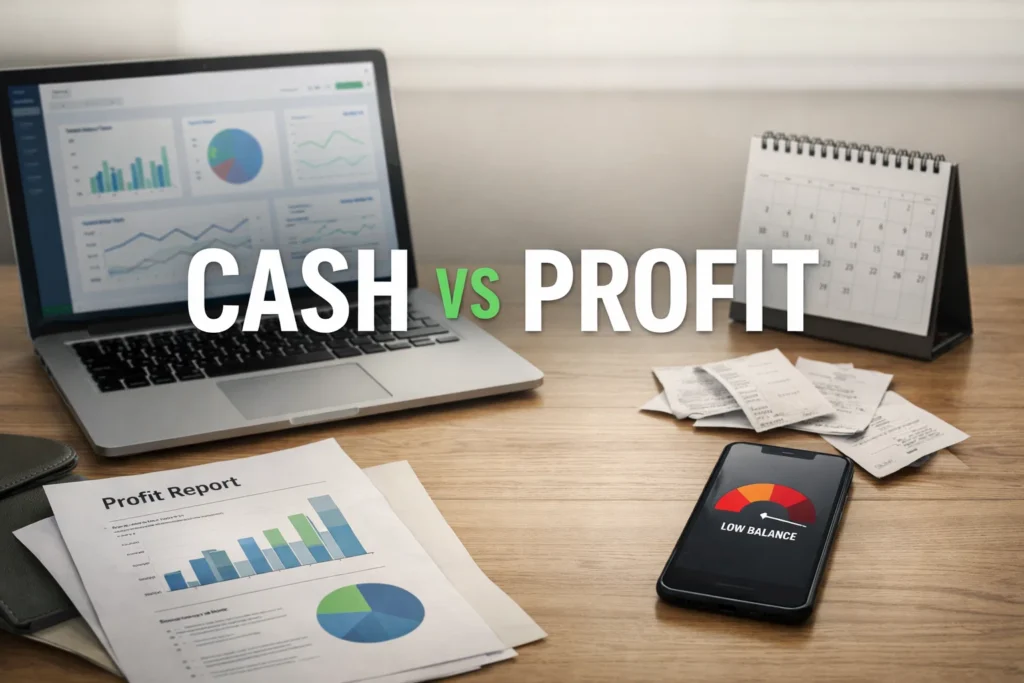
Why Profitable Businesses Still Run Out of Cash (And Why Tax Season Exposes It)
One of the most frustrating moments for a business owner is realizing this:
Tax season tends to bring that question to the surface.
The return shows profit. The books look reasonable. But the bank balance tells a different story.
That disconnect is more common than most owners realize — and it has very little to do with how hard they’re working.
Quick answer
Profit is an accounting measure. Cash is a timing reality. A business can look profitable on paper while cash tightens quietly — and tax season is often when the gap finally becomes impossible to ignore.
If this feels familiar, a quick review can help you understand why cash feels tight — and what to adjust before it turns into a scramble.
Start My Free Review
Most people finish in ~2–3 minutes. No documents needed to start.
Profit and cash don’t move the same way
Profit is an accounting measure.
Cash is a timing reality.
A business can be profitable and still run out of cash because:
- Customers pay later than expected
- Expenses are paid upfront
- Debt, taxes, and owner draws don’t show up clearly on the P&L
- Growth quietly absorbs cash before anyone notices
None of that means something is “wrong.”
It means profit alone doesn’t tell the full story.
Why tax season makes this feel worse
Tax season has a way of magnifying cash stress.
Taxes are often due at the same time as:
- Slower winter revenue
- Higher operating costs
- Catch-up payments
- Owner draws taken earlier in the year
On paper, the business looks successful.
In real life, cash feels constrained.
Without regular review during the year, that pressure feels sudden — even though it usually built up gradually.
The warning signs most owners miss
Cash problems rarely appear overnight.
They show up as small signals that are easy to ignore:
- Cash feels a little tighter each month
- Bills get paid closer to their due dates
- Decisions get delayed because things feel unclear
- Hiring or investing feels risky — even with “good” numbers
When no one is watching cash alongside profit, those signals don’t stand out until they’re uncomfortable.
What changes when cash is reviewed proactively
When bookkeeping is actively managed, cash isn’t an afterthought.
Each month includes questions like:
- Did cash move the way we expected given profit?
- Are margins strong enough to support current spending?
- How long could the business operate if revenue dipped?
- Are upcoming obligations already accounted for?
That doesn’t eliminate risk — but it replaces surprise with awareness.
Owners can adjust earlier, instead of reacting later.
Why this isn’t about cutting costs
When cash tightens, the instinct is often to cut expenses immediately.
Sometimes that’s necessary.
Often, it isn’t.
Without understanding why cash is tightening — timing, growth, taxes, or margins — cost-cutting can do more harm than good.
Clarity comes first.
Decisions come second.
Where this fits in our process
At Bookkeeping Express, cash is reviewed as part of the monthly process — not just at tax time.
Finalyze helps translate the numbers into clear insight:
- What’s happening with cash
- How long the current position is sustainable
- Which decisions are safe now, and which should wait
Because running out of cash is rarely about effort.
It’s about visibility.
If cash feels tighter than it should
Start with a free review. We’ll help you understand why cash is tightening — and what the numbers support going forward.
Start My Free ReviewNo prep. No pressure. Just clarity.
A simple next step
If tax season made you realize cash feels tighter than expected — even in a profitable year — the most helpful next step is understanding why.
Not with another spreadsheet.
But with a clear review of what the numbers are actually showing and what they support going forward.
That clarity alone often changes the conversation.
FAQ
If we’re profitable, why is cash still tight?
Profit doesn’t reflect timing. Cash can tighten due to slow customer payments, upfront expenses, debt payments, taxes, owner draws, or growth absorbing cash before it’s obvious.
Is this just a spending problem?
Not always. Sometimes it’s a timing issue (receivables/payables), a planning issue (taxes/obligations), or a margin issue. Clarity comes before cost-cutting.
How often should we review cash (not just profit)?
Monthly is ideal. A consistent review helps you spot cash drift early and make decisions while there’s still time to adjust.
Final thought:
A profitable business can still run out of cash — not because the owner isn’t working hard, but because profit alone doesn’t create visibility.
Optional related reading (only include if these pages exist):
How to calculate cash runway (months)
•
Why bookkeeping usually falls behind