
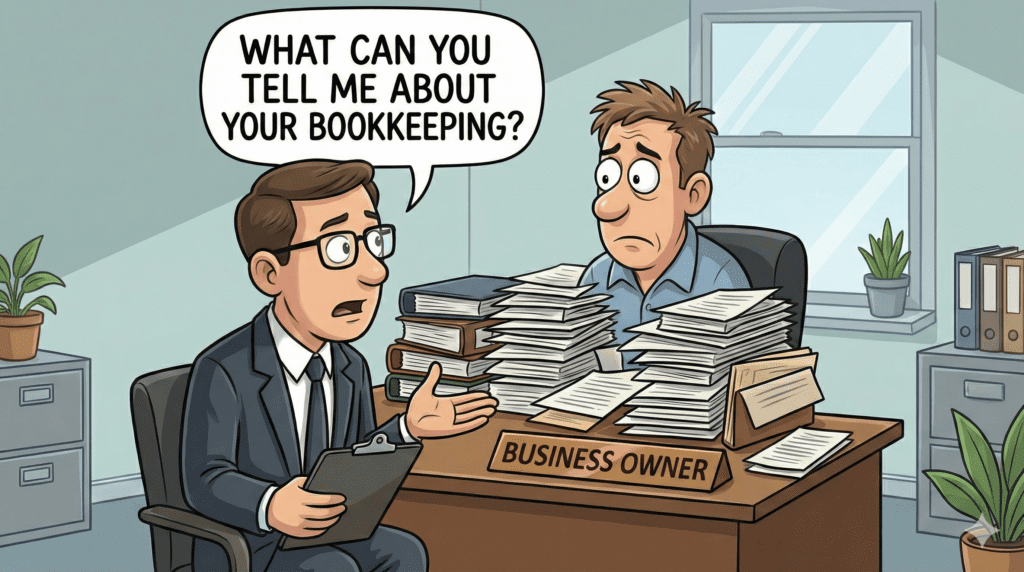
Why Your QuickBooks Reports Look Fine — Until Your CPA Asks Questions
This is one of the most common things we hear during tax season:
Quick answer
QuickBooks can be accurate and still not ready. Tax season doesn’t usually create problems — it reveals what wasn’t reviewed during the year.
The reports were there. The numbers seemed reasonable. Nothing looked obviously broken.
But once tax prep started, issues surfaced — reclassifications, missing context, unexpected tax exposure, and a lot of back-and-forth to unwind decisions that were made months ago.
That disconnect isn’t unusual.
If this feels familiar, a quick review now can prevent repeat surprises.
Start My Free Review
Most people finish in ~2–3 minutes. No documents needed to start.
Accuracy isn’t the same as readiness
❌ Just "Accurate"
- Transactions are categorized
- Bank accounts reconcile
- Result: Numbers are correct, but context is missing.
✅ Tax & Decision Ready
- Transactions are reviewed for logic
- Trends are flagged monthly
- Result: You know the story before the CPA asks.
QuickBooks is very good at recording activity. If transactions are entered and accounts reconcile, the reports can look perfectly clean.
But tax readiness and decision readiness require more than accuracy.
It requires review, interpretation and analysis.
Most bookkeeping workflows stop once the numbers balance. There’s no step where someone asks:
- Does this month make sense compared to the last few?
- Did margins tighten for a reason, or is something drifting?
- Is cash moving the way we’d expect given profit?
- Would a CPA be surprised by anything here?
Without that layer, the books can be technically correct and still unhelpful when questions start coming. Clean books give you the ingredients. Analytics turns them into a recipe — showing you how to combine what you have to get the result you want.
Why tax season exposes the gaps
Tax season doesn’t usually create problems.
It reveals them.
Things like:
- Income that was classified correctly, but not planned for
- Expenses that were deductible, but poorly timed
- Cash that looked available, but was already spoken for
- Profit that existed on paper, but not in the bank
When no one has been reviewing the books with intent during the year, those issues stay quiet.
Tax prep is often the first time someone slows down enough to look at the full picture.
That’s when the unpleasant surprises show up.
The questions owners are actually trying to answer
Most business owners aren’t looking for more detail. They’re trying to answer practical questions:
- Why was the tax bill higher than expected?
- Should we have set aside more cash?
- Was this a good year — or just a busy one?
- Could we have made different decisions earlier?
Those answers already exist in the books.
They’re just buried inside reports that assume someone else will interpret them later. But later is often too late.
What changes when bookkeeping is actively reviewed
When bookkeeping is actively managed, the monthly process doesn’t stop at reconciliation.
Someone looks at what changed. They compare trends.
They notice when margins slip, cash tightens, or categories drift.
They flag issues early — before they show up as tax surprises.
That doesn’t eliminate taxes.
But it does eliminate confusion and reactivity.
Owners know what’s happening while there’s still time to adjust — not months later when the year is already closed.
Why “fine” isn’t good enough
If your QuickBooks reports look fine but tax season feels stressful, that’s usually the signal.
Not that the books are wrong —
but that no one has been owning the story they’re telling.
And without that ownership, clarity always comes late.
Where this fits at Bookkeeping Express
At Bookkeeping Express, bookkeeping isn’t considered complete just because the numbers balance.
Every month includes a review focused on:
- What changed
- What matters right now
- What might become a problem if ignored
Finalyze is built into that process to translate accurate books into plain-English — not dashboards, not charts, just context.
Because accuracy without explanation is frustrating.
And explanation without accuracy is misleading.
FAQ
What does “tax-ready” bookkeeping actually mean?
It means your books are accurate, current, consistently categorized, and supported by context—so a CPA can prepare returns without surprises, rework, or a long back-and-forth to clarify what happened.
Why do CPA questions show up if the books are reconciled?
Reconciliation confirms balances match statements. It doesn’t confirm that categories are appropriate, timing makes sense, or that unusual changes were reviewed and explained. That’s where the questions come from.
How often should QuickBooks be reviewed (not just reconciled)?
Monthly is ideal. A monthly review catches drift early—before it becomes a tax-time cleanup project.
Do I need a CPA, a bookkeeper, or both?
Most businesses need both at different times: bookkeeping keeps the data current and consistent, while a CPA uses that data for tax strategy, filings, and higher-level planning. The smoother the bookkeeping, the more valuable (and efficient) the CPA work becomes.
A simple next step
If tax season surfaced questions you didn’t expect — or answers you wish you’d had sooner — the next step isn’t a big commitment.
It’s simply reviewing where the books stand, what they’re showing, and whether they’re being actively managed or just maintained.
That conversation alone often clears up more than another report ever will.
Want clarity before the next round of CPA questions?
Start with a free review. We’ll help you see what’s working, what’s missing, and what would prevent surprises going forward.
Start My Free ReviewNo prep. No pressure. No judgment. Just a clear next step.
Optional related reading: Why bookkeeping usually falls behind • How to calculate cash runway (months)
Final thought:
If your QuickBooks reports look “fine” but tax season feels stressful, the problem usually isn’t accuracy —
it’s that no one has been owning the story the numbers are telling.