
What Tax Season Reveals About Your Small Business
Tax season often feels like the finish line of the financial year. The return gets filed. The numbers are finalized. The year is officially closed.
But for many business owners, tax season does something unexpected. It reveals things about the business that were not obvious during the year. Sometimes those revelations are reassuring. Other times they raise new questions. Either way, tax season tends to surface patterns that were forming quietly all along.
Quick Answer: Tax season often reveals the bigger financial story of the year — whether revenue really grew, whether expenses rose too quickly, whether profit improved, and whether the balance sheet became stronger or more strained. The challenge is that many of those insights only become obvious after the year is already over.
Why the Year Looks Different in Retrospect
When you are running a business day to day, most decisions are made quickly. Hiring someone new. Purchasing equipment. Increasing marketing. Raising prices.
Each decision feels isolated in the moment. But when the full year of financial activity is assembled for tax preparation, those decisions appear together for the first time.
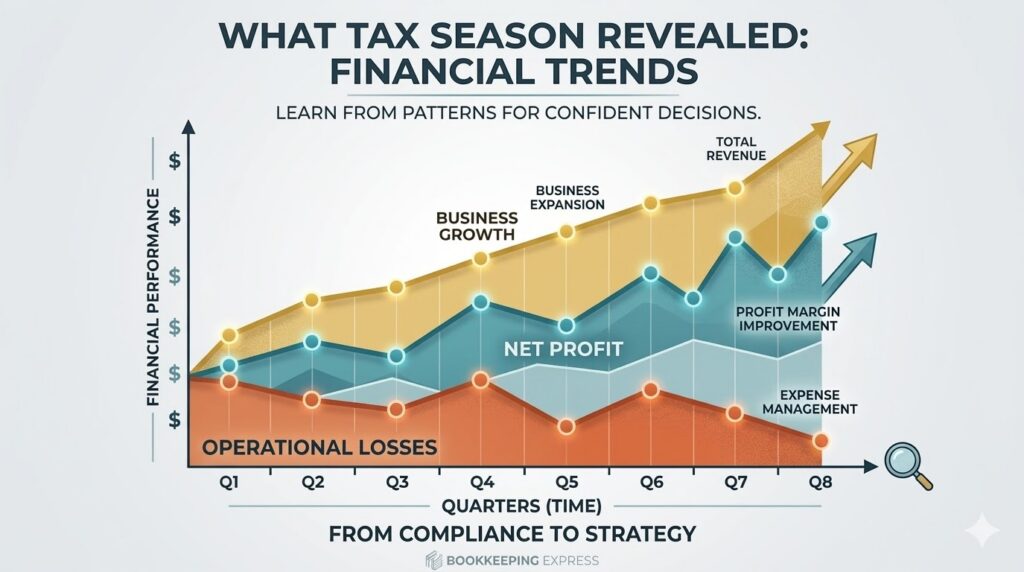
Patterns that were not visible during the year suddenly become obvious. What felt like a series of separate moves starts to look like one connected financial story.
The Story the Numbers Start to Tell
Once the full year is finalized, the financials often reveal a clearer story about how the business actually performed.
For example, revenue may have grown steadily even if it did not feel that way month to month. Expenses may have increased faster than expected. Profit may have been stronger — or weaker — than the owner realized.
These patterns are easier to see when the entire year is reviewed at once.
| What the year-end numbers reveal | What it may mean | Why it matters going forward |
|---|---|---|
| Revenue grew more steadily than expected | The business may be more stable than it felt month to month | Helps with planning, hiring, and confidence in pricing decisions |
| Expenses rose faster than revenue | Growth may be coming with margin pressure | Signals the need to review overhead, vendors, labor, or spending habits |
| Profit was stronger or weaker than expected | The business may be more efficient — or more fragile — than assumed | Shapes tax planning, reserve planning, and next-year goals |
| Cash, debt, receivables, or inventory shifted meaningfully | The business structure changed even if profit looked normal | Shows whether the company became healthier, tighter, or more exposed |
Growth, Stability, or Strain
For many businesses, tax season highlights which direction the business is really moving.
Is revenue growing consistently? Are expenses scaling responsibly? Is profit improving or becoming more volatile?
Sometimes the results confirm what owners already sensed. Other times they reveal something surprising. A business that felt busy all year may not have improved financially as much as expected. A year that felt uneven may still show underlying progress.
The Balance Sheet Often Tells the Bigger Story
Tax returns focus heavily on profit. But the balance sheet often reveals the structural changes that happened during the year.
Things like:
- Cash reserves increasing or declining
- Debt balances growing or shrinking
- Receivables expanding
- Inventory levels shifting
These movements can explain why the year felt easier — or more stressful — than the profit number alone suggests.
A business can show profit on paper while still feeling operational pressure if cash tightened, receivables stretched, or debt increased. That is why balance sheet review often gives owners a more complete picture of what really changed.
Why These Insights Often Arrive Too Late
One of the frustrations of tax season is timing. By the time the return is complete, the year is already over. Decisions that shaped the results cannot be changed.
The insights are valuable — but they arrive after the fact. This is why many business owners feel like tax season provides answers they wish they had earlier.
The numbers finally make the story visible, but the window to respond to that story has already narrowed or closed.
Turning Tax Season Into Insight for the Next Year
The real value of tax season is not just filing the return. It is understanding what the year revealed.
Questions worth asking include:
- What drove profit this year?
- Which expenses changed the most?
- Did growth increase financial stability?
- What patterns should influence next year’s decisions?
When those questions are explored, tax season becomes less of a conclusion and more of a starting point. Instead of treating the return as the final step, it becomes a review of what the business learned and where it should go next.
Where This Fits in Our Process
At Bookkeeping Express, tax season is viewed as a moment of reflection — not just compliance. The financial statements prepared for taxes contain valuable insight about how the business evolved during the year.
By reviewing those patterns carefully, owners can enter the next year with clearer visibility into what is working and what may need adjustment.
Finalyze builds on that process by translating those patterns into plain-English insights throughout the year — not just at tax time.
Looking Forward
Tax season closes the books on the past year. But the lessons it reveals are often most useful for the year ahead.
The more clearly a business understands what the numbers are saying, the easier it becomes to make confident decisions going forward.
Bottom line: Tax season does more than finalize the year. It often reveals the patterns that shaped it. The businesses that get the most value from tax season are the ones that use those patterns to make better decisions in the year ahead.
Frequently Asked Questions
What does tax season usually reveal about a small business?
It often reveals whether revenue really grew, whether expenses stayed under control, whether profit improved, and whether the business became financially stronger or more strained beneath the surface.
Why do business owners notice patterns at tax time that they missed during the year?
Because tax preparation pulls the full year into one view. Decisions that felt separate during the year are finally visible together, which makes trends easier to spot.
Why is the balance sheet important during tax season?
The balance sheet can reveal changes in cash, debt, receivables, and inventory that explain why the year felt easier or harder than the profit number alone suggests.
How can a business use tax season insights more effectively?
Use tax season as a review point, not just a filing deadline. Look at what drove profit, what changed structurally, and which patterns should shape decisions for the year ahead.
Want clearer financial insight before next tax season?
If tax season is when the full story finally becomes visible, it may be time for better visibility during the year. Regular financial review can make next year’s decisions clearer long before the return is filed.